
Music on the podium
When composers competed at the Olympics
For almost forty years you could win an Olympic gold medal without running, swimming or lifting anything. Writing a march for orchestra was enough. So was painting a rugby match, or designing a stadium.
Art competitions were part of the Games from 1912 to 1948, in five categories: architecture, literature, music, painting and sculpture. One rule applied to all of them: the subject had to be sport.
Coubertin's idea
Pierre de Coubertin, the founder of the modern Olympics, was almost stubborn about it. He had the Greek model in mind, where the Games celebrated body and mind together, and he tried to bring the arts into the programme from the very first editions. He only managed it in Stockholm, in 1912, when he finally found enough entrants and judges.
And in Stockholm, he won. The gold medal for literature went to an Ode to Sport signed by two German authors, Georges Hohrod and Martin Eschbach. They did not exist: they were two pen names of Coubertin, who was French. To this day, the records credit that medal to Germany.
That same year the American Walter Winans won gold in sculpture with a bronze trotting horse, and silver in shooting. He is one of only two people in history with an Olympic medal in both sport and art.
A jury that read the notes
The first gold medal for music went to an Italian, Riccardo Barthélemy, for an Olympic Triumphal March. It was the only prize awarded in the category that year.
There is a detail that makes these contests very odd if you make music: the compositions were submitted on paper, and the jury judged them by reading the score. Nobody played them. Reading an orchestral score and hearing all of it in your head at once is a job for very few people, and the juries were often so unsure that they preferred not to award anything. In 1924 no music medal was given at all. The only time the winning pieces were performed for an audience was in Berlin, in 1936.
Italians did well. Oreste Riva took silver in Antwerp in 1920 with another triumphal march, Lino Liviabella silver in Berlin in 1936 with Il vincitore (The Victor). In London in 1948, neither gold nor silver was awarded for vocal music: the only medal was a bronze for Gabriele Bianchi and his Inno olimpionico.
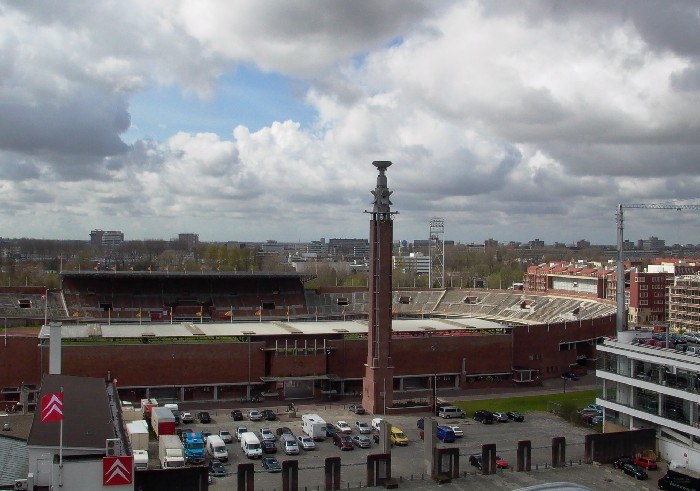
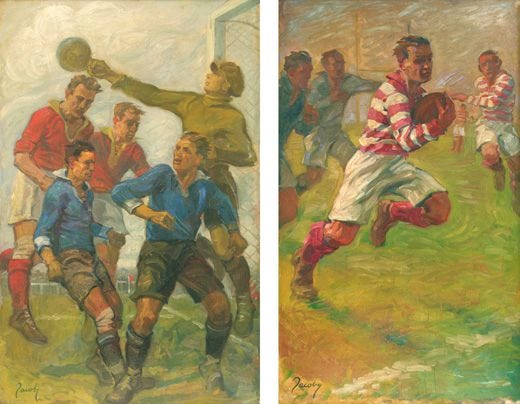
In the other arts the medals have stayed better known. The Amsterdam stadium where the 1928 races were run won gold for architecture that same year. The Luxembourg painter Jean Jacoby is the only artist with two Olympic golds, in 1924 and 1928.
Why they ended
In 2017 I wrote that the last edition was in 1952, and that artists had pulled out for fear of embarrassing themselves. Both things were wrong. The last contest with medals was in London, in 1948. And the reason was different: the Olympics were for amateurs, and almost every artist taking part made a living from their art. In 1949 a report by the Olympic Committee said so in writing and proposed replacing the contests with an exhibition. Helsinki, in 1952, had only that.
In total there were about a hundred and fifty art medals: 147 by the most common count, a few more by others. The historian who dug them back up, Richard Stanton, wrote a whole book about them, The Forgotten Olympic Art Competitions.
Something survived. Since the 2000s the Olympic Committee has run a Sport and Art contest before every Summer Games, with cash prizes and an exhibition at the Olympic Museum in Lausanne. But it is for sculpture and graphic works. Music has not stepped back onto the podium.
_This article is a 2026 rewrite of a piece first published on Medium in November 2017._
Alessandro Porri
More of these, here.
All articles →